
PACELAB
Half Marathon Blueprint
CONTENTS
Getting Started
The 8-Week Plan
Race Preparation
Race Day & Beyond
pacelab.run
PACELAB
Half Marathon Blueprint
CONTENTS
Getting Started
The 8-Week Plan
Race Preparation
Race Day & Beyond
pacelab.run
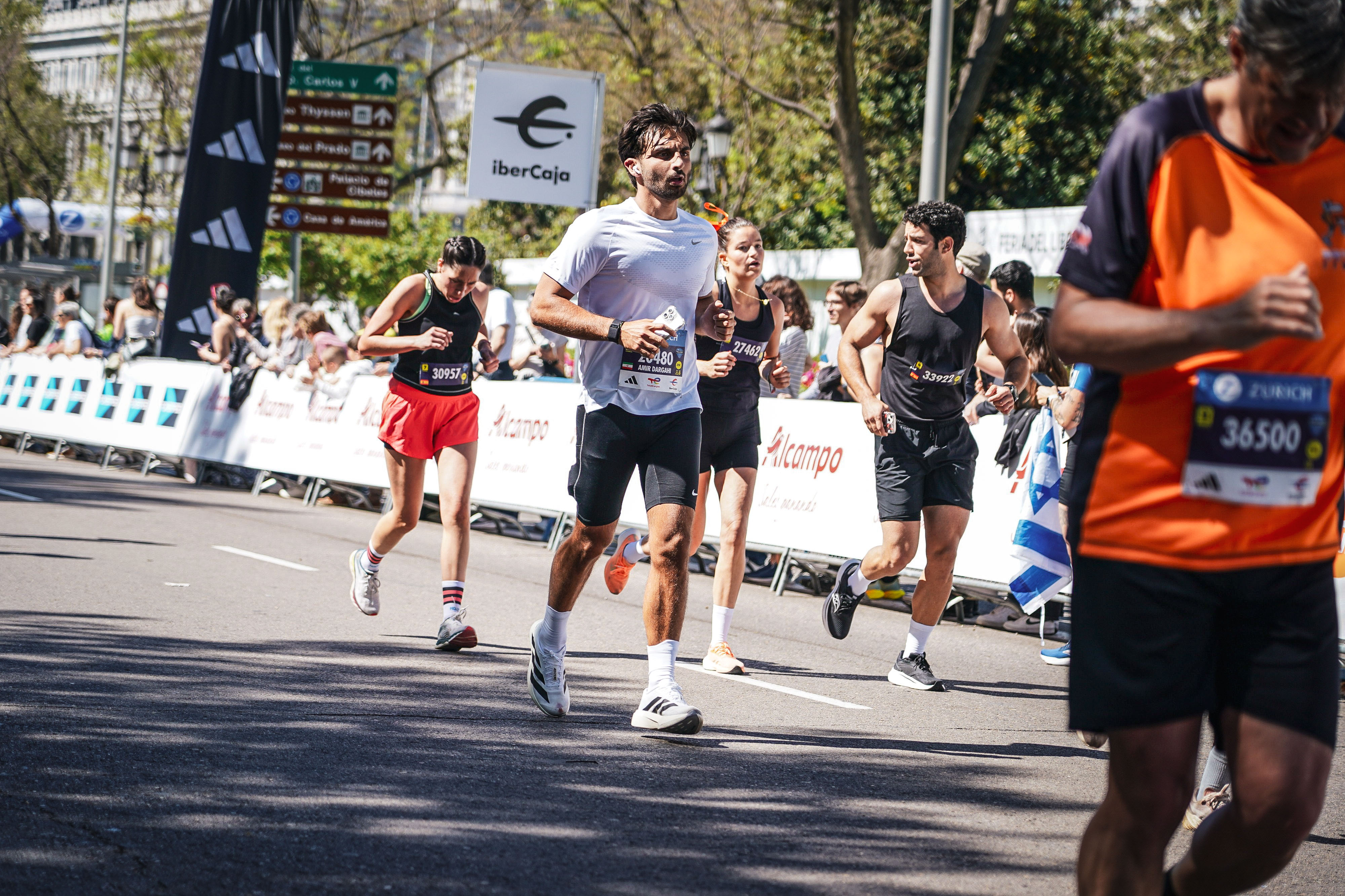
Before you begin Week 1, we want you to know that this plan has already been used by runners exactly like you. Three recreational runners — none of whom had ever run a half marathon before — followed the PaceLab 8-week plan and competed in the Movistar Madrid Medio Maratón on 22 March 2026. All three finished. All three set personal records.
Movistar Madrid Medio Maratón — 22 March 2026
| Runner | Pre-Plan Longest Run | Finish Time | Avg Pace | Result |
|---|---|---|---|---|
| Yasha | 8–10 km | 1:55:00 | 5:23 /km | ✓ Personal Best |
| Noa | 15 km | 1:58:00 | 5:31 /km | ✓ Personal Best |
| Yousef | 4–5 km | 2:15:00 | 5:47 /km | ✓ Personal Best |
In Their Own Words
“The structure was what made the difference. I never had to think about what to do next — I just followed the plan. By race day I felt genuinely ready, not just hoping for the best.”
— Yasha
“I had tried building my own plan using ChatGPT before and it was too generic to follow with confidence. This was different — it was specific, progressive, and it worked exactly as described.”
— Noa
“I started from almost nothing — my longest run before the plan was 5km. The fact that I finished a half marathon 8 weeks later still does not feel real. The plan made it manageable from day one.”
— Yousef
The Profile
No Prior Half Marathon Experience
None of the three had ever run a half marathon before. They were recreational runners with varying fitness levels — not athletes with years of structured training behind them.
Three Sessions Per Week
All three followed the exact 3-session weekly structure in this plan. No additional training, no gym membership, no personal coach.
One Plan, Start to Finish
Each runner followed the plan from Week 1 to race day without modifying the structure. Consistency — not talent — was the deciding factor.
Signing up for a half marathon is the hardest decision — most people never do it. This plan exists for runners who are serious about finishing well, not just finishing. It is built for first-timers who want structure, clarity, and a plan they can trust from day one.
Over the next 8 weeks you will follow a progressive training system built around three sessions per week. Every session has a purpose. Every week builds on the last. Nothing is random.
Your only job is to show up and follow the plan. The thinking has been done for you.
Follow the sessions in order. Do not skip ahead or swap sessions between weeks.
The pace guidance is a target, not a rule. Run by effort on hard days, by pace on easy days.
Week 4 is a recovery week. Do not add extra sessions — the reduced volume is intentional.
Fill in the weekly tracker after every session. It takes 60 seconds and will help you spot patterns in your training.
If you miss a session, skip it and continue from where you are. Do not double up.
Confirm all five before beginning Week 1
Who This Plan Is For
This plan is built for recreational runners aged 20–40 preparing for their first half marathon. You run regularly but have never raced beyond 10km. You want a structured system that tells you exactly what to do each week — without requiring a coach, a gym membership, or more than three sessions per week.
SESSION 1
Easy Run · Aerobic Base
Runs at a conversational pace. You should be able to hold a full conversation. These sessions build your aerobic engine and accelerate recovery between harder efforts.
SESSION 2
Workout · Speed & Strength
Tempo runs, intervals, fartlek, or threshold efforts. Each week specifies the format. These sessions make you faster and more efficient at race pace.
SESSION 3
Long Run · Endurance
The most important session of the week. Run at an easy, sustainable pace. Distance increases progressively each week. This is where your half marathon fitness is built.
Progressive Overload
Distance and intensity increase gradually each week. Week 4 reduces volume intentionally to allow adaptation. Do not skip the recovery week.
Consistency Over Intensity
Three sessions per week done consistently will always outperform six sessions done sporadically. Showing up matters more than any single session.
Respect the Taper
Weeks 7 and 8 reduce volume deliberately. This is not a sign to add more — it is where your body consolidates fitness for race day.
Every session in this plan belongs to one of four categories. Understanding what each session does and why it is prescribed will help you execute each one correctly. Running the wrong session at the wrong effort is the most common reason structured training fails. Read this page before starting Week 1.
Aerobic Base · Recovery
Your easy run is the foundation of the entire plan. It should feel genuinely easy — you must be able to speak in full sentences throughout. If you cannot, you are running too fast. Easy runs build your aerobic engine, accelerate recovery between hard sessions, and account for the majority of your weekly volume. The golden rule: if in doubt, go slower.
Tempo · Intervals · Threshold
Your workout session changes format each week — tempo runs, intervals, fartlek, or threshold efforts. Tempo runs (RPE 6–7) build your ability to sustain race pace. Intervals (RPE 8–9) develop raw speed. Threshold runs (RPE 7) push your lactate threshold higher. Always warm up with 1km easy before any workout session and cool down with 1km easy after.
Endurance · Race Simulation
The long run is the single most important session of every week. It builds the raw endurance required to cover 21.1km on race day. Long runs are always run at an easy, conversational pace. Distance increases progressively each week, peaking in Week 6 before the taper. Use your long runs as dress rehearsals: wear your race shoes, practice your fueling strategy, and run at the time your race starts.
Rate of Perceived Exertion
All sessions use RPE — a 1–10 scale of effort — rather than fixed paces. RPE adapts to your body on any given day, accounting for heat, fatigue, stress, and terrain in a way pace targets cannot.
| RPE 1–2 | Walking, fully comfortable |
| RPE 3–4 | Easy run — full sentences possible |
| RPE 5–6 | Race pace — one sentence possible |
| RPE 6–7 | Tempo — short phrases only |
| RPE 7–8 | Threshold — a few words |
| RPE 8–9 | Intervals — 1–2 words maximum |
| RPE 10 | Sprint — cannot speak |
What you do in the 5 minutes before and after each session has a direct impact on injury risk and training quality. These routines are not optional extras — they are part of the session.
Pre-Run Warm-Up
Do this before every session — 5 minutes. For easy runs, a 2-minute brisk walk is sufficient. Never skip before workout sessions.
1. Leg Swings — 10 each leg
Stand beside a wall. Swing one leg forward and back in a controlled arc. Loosens hip flexors and hamstrings before running.
2. Hip Circles — 10 each direction
Stand feet shoulder-width apart. Rotate hips in large circles. Activates glutes and mobilises the hip joint.
3. Ankle Rotations — 10 each foot
Lift one foot and rotate the ankle slowly in both directions. Prepares the ankle joint for the impact of running.
4. High Knees — 20 reps
March or jog in place, driving each knee up to hip height. Activates hip flexors and raises heart rate gradually.
5. Glute Bridges — 10 reps
Lie on your back, knees bent. Drive hips toward the ceiling, squeezing glutes at the top. Activates the posterior chain before running.
6. Dynamic Calf Raises — 15 reps
Stand on flat ground. Rise onto toes slowly and lower with control. Prepares calves and Achilles for running load.
Post-Run Recovery
Do this after every session — 5 to 10 minutes.
Cool Down
Walk for 3–5 minutes immediately after finishing. Do not stop abruptly. Walking brings your heart rate down gradually and prevents blood pooling in the legs.
Static Stretching
Hold each stretch for 30–45 seconds. Focus on hip flexors, hamstrings, calves, quads, and glutes. Only stretch after running — never before. Warm muscles stretch better.
Refuel Within 30 Min
Your glycogen window is open for 30–45 minutes post-run. Consume carbohydrate and protein within this window. A banana with peanut butter or a recovery shake works well.
Rest Day Rules
What to Do on Rest Days
Rest days are not wasted days — they are where your body absorbs the training stimulus and builds fitness. Active rest such as a short walk, light stretching, or foam rolling is preferable to complete inactivity. Avoid any activity that causes significant muscular fatigue. Sleep is your highest priority recovery tool: aim for 7–9 hours on nights following hard sessions.
Good running form reduces injury risk, improves economy, and keeps you moving well in the final kilometres when fatigue sets in. You do not need perfect form — you need consistent form. These are the six elements that matter most for half marathon runners.
Head Position
Keep your gaze 10–15 metres ahead, not at your feet. A dropped chin increases tension across the neck and upper back and restricts your breathing.
When tired: consciously lift your gaze — your posture will follow.
Shoulders
Keep shoulders low and relaxed, not hunched toward your ears. Tension in the shoulders wastes energy and restricts arm drive.
Periodically drop and shake them out during long runs and in the race.
Arm Swing
Arms should drive forward and back — not across your body. Bend at 90 degrees. Relaxed hands — imagine holding a crisp without crushing it.
Strong arm drive maintains cadence when legs are tired.
Cadence
Aim for 170–180 steps per minute. Lower cadence means longer stride, more impact, more injury risk. Increase cadence by 5–10% rather than changing stride length.
Most GPS watches display cadence in real time.
Foot Strike
Land with your foot beneath your hips — not out in front. Overstriding is the leading cause of shin splints and knee pain. Midfoot landing distributes impact more efficiently.
Heel striking with a straight leg increases impact by up to 3x.
Breathing
Breathe from the diaphragm, not the chest. A useful rhythm: inhale for 3 steps, exhale for 2. If you cannot breathe comfortably, you are running too fast.
Breathing rate is the most honest indicator of effort.
Run a Mental Scan Every 5km
The first week is not about fitness — it is about establishing the habit. Every session this week should feel controlled and manageable. If you finish your runs feeling like you could have done more, you have done it right. Resist the urge to push harder than prescribed. The training effect comes from consistency, not from individual heroic efforts.
This Week's Sessions
| Session | Type | Distance | RPE | Coaching Notes |
|---|---|---|---|---|
| Session 1 | Easy Run | 4 km | 3–4 | Run at a fully conversational pace. If you cannot speak in complete sentences, slow down. No warm-up needed — just start easy and stay easy. |
| Session 2 | Tempo Run | 5 km total 1km W/U · 3km tempo · 1km C/D |
6–7 tempo 3–4 W/U & C/D |
Warm up 1km easy jog. Run 3km at a comfortably hard effort — short phrases only, no conversation. Cool down 1km easy. This pace trains your lactate threshold. |
| Session 3 | Long Run | 7 km | 3–4 | Your most important run of the week. Run slower than feels natural — this is not a race. Aim for an effort you could sustain for twice the distance. Bring water if above 18°C. |
Suggested Weekly Schedule
Coaching Notes for This Week
What is happening physiologically: Your cardiovascular system is beginning to build capillary networks inside working muscles and increase stroke volume — the amount of blood pumped per heartbeat. These changes are invisible now but are the structural groundwork for everything that follows. Every easy kilometre this week counts.
Common mistake this week: Running easy runs at a moderate effort. Beginners often feel self-conscious at a genuinely easy pace and push harder. This blunts the aerobic adaptation signal and leaves you under-recovered for Wednesday's tempo. Slow down until you can speak in full, unhurried sentences.
Where you are in the journey: The habit matters more than the performance this week. Three completed sessions — regardless of how they feel — is a success. Most runners who start this plan succeed. The ones who do not run too hard in Week 1 and arrive at Week 3 already fatigued.
This week introduces your first interval session — short, hard repetitions with structured recovery between them. Intervals feel uncomfortable. That discomfort is the stimulus that makes you faster. The key is running the hard parts hard and the recovery parts genuinely easy. Your easy run this week should feel like a recovery from the interval session — keep it slow.
This Week's Sessions
| Session | Type | Distance | RPE | Coaching Notes |
|---|---|---|---|---|
| Session 1 | Easy Run | 5 km | 3–4 | Conversational pace throughout. If your legs feel heavy from the week starting, that is normal — keep moving and the fatigue will clear. |
| Session 2 | Interval Session | ~6 km total 1km W/U · 4×800m · 1km C/D |
8–9 intervals RPE 2 recovery |
Warm up 1km easy. Run 4 × 800m at near-maximum effort — 1–2 words only. Recover 90 seconds of slow walking between reps. Cool down 1km easy. Do not skip recoveries. |
| Session 3 | Long Run | 8 km | 3–4 | First run over 7km. Go slower than last week's long run felt — longer distance requires more conservative pacing. Walk 60 seconds every 3km if needed to keep effort truly easy. |
Suggested Weekly Schedule
Coaching Notes for This Week
What is happening physiologically: Interval training triggers neuromuscular adaptations — your brain becomes more efficient at recruiting fast-twitch muscle fibres. It also pushes your VO2 max upward. Even at this early stage, short bursts of hard effort are teaching your body to process oxygen faster, which improves your efficiency at all paces including easy and race pace.
Common mistake this week: Jogging the recovery between reps instead of walking. The 90-second walking recovery allows the next interval to be genuinely hard. If you are running during recovery, your intervals are too slow. The contrast between maximal effort and full recovery is what produces the adaptation.
Where you are in the journey: Two weeks in and you are already training in a way most recreational runners never do. That discomfort during the 800m reps is the training signal — lean into it. Then trust your easy run and your long run to support recovery. The structure exists for a reason.
Volume increases again this week. Your long run crosses 10km for the first time — a significant milestone. The aerobic base you are building now is the foundation everything else sits on. Do not rush it. A runner who builds slowly and consistently will always outperform a runner who trains too hard too early and gets injured.
This Week's Sessions
| Session | Type | Distance | RPE | Coaching Notes |
|---|---|---|---|---|
| Session 1 | Easy Run | 5 km | 3–4 | Active recovery from last week. Keep the effort genuinely easy — this run supports adaptation, it does not create it. |
| Session 2 | Tempo Run | 6 km total 1km W/U · 4km tempo · 1km C/D |
6–7 tempo 3–4 W/U & C/D |
Warm up 1km easy. Run 4km at a sustained, comfortably hard effort — 1km longer than Week 1. You should feel the difference in the final kilometre. Cool down 1km easy. |
| Session 3 | Long Run | 10 km | 3–4 | Your first double-digit run. Run the first 5km conservatively, then settle into your natural easy rhythm. Take a gel or snack at the 45-minute mark if running over 60 minutes. |
Suggested Weekly Schedule
Coaching Notes for This Week
What is happening physiologically: Three weeks of consistent running has begun increasing mitochondrial density in your slow-twitch muscle fibres. More mitochondria means more energy per unit of oxygen — directly improving your running economy. The 10km long run will also stress your glycogen stores for the first time, triggering adaptations that increase how much fuel your muscles can hold on race day.
Common mistake this week: Skipping mid-run fuelling on the long run. If your run exceeds 60 minutes, glycogen stores begin to deplete. A gel or snack at the 45-minute mark also trains your gut to absorb carbohydrates while running — a skill as important as the physical fitness itself. Runners who skip this arrive at race day unable to fuel effectively.
Where you are in the journey: Running 10km for the first time is a genuine milestone. Three weeks ago you were a 5km runner. After Saturday's long run, pause and acknowledge what you have built. The half marathon still feels distant — but you are now more than halfway there in terms of weekly long run distance.
Volume drops 20% this week — and that is not optional. Your body does not adapt during training; it adapts during recovery. The fitness gains from weeks 1 to 3 are being consolidated right now. Adding extra sessions this week will not accelerate progress — it will delay it. Embrace the lighter load. Arrive at Week 5 fresh.
This Week's Sessions
| Session | Type | Distance | RPE | Coaching Notes |
|---|---|---|---|---|
| Session 1 | Easy Run | 4 km | 3 | Shorter and easier than usual. If your legs feel good, resist the urge to extend the run. This is active recovery — the goal is blood flow, not training load. |
| Session 2 | Recovery Intervals | 6 km total 1km W/U · 3×1km · 1km C/D |
6–7 intervals RPE 2 recovery |
Lighter than Week 2 by design. Warm up 1km easy. Run 3 × 1km at controlled effort with 90 sec walking recovery. Focus on smooth, efficient form rather than speed. Cool down 1km easy. |
| Session 3 | Long Run | 8 km | 3–4 | Reduced from last week. Run fully relaxed — no pushing. Use this run to think about your race goals and review the pacing chart on page 12. |
Suggested Weekly Schedule
Coaching Notes for This Week
What is happening physiologically: This week your body undergoes supercompensation — it does not just recover to baseline, it adapts above it. Aerobic enzyme activity is increasing, glycogen storage capacity is expanding, and connective tissue is remodelling to handle higher loads. None of this happens during training. It happens now, during recovery. The lighter load is not a break from progress; it is where progress occurs.
Common mistake this week: Adding extra cross-training to compensate for the lighter running load. Cycling, swimming, or gym sessions on rest days send a metabolic stress signal that competes with the recovery adaptation. Rest days mean rest. If you feel restless, use the time to read the pacing guide on page 12 and research your race course.
Where you are in the journey: Accepting a lighter week when your body feels good is harder than it sounds — but it is one of the most important skills a runner can develop. You will need this discipline again in Weeks 7 and 8. Practise it here first.
From this week, sessions are designed around your target half marathon pace. Before Session 2, open the pacing guide on page 12 and confirm your goal time and required pace in min/km. You will run that exact pace during the tempo session. This is the first time in the plan that pace matters more than effort — learn what it feels like in your body.
This Week's Sessions
| Session | Type | Distance | RPE | Coaching Notes |
|---|---|---|---|---|
| Session 1 | Easy Run | 6 km | 3–4 | Longest easy run of the plan. Keep it fully conversational — this is pure aerobic base work. Do not let the extra distance push your effort up. |
| Session 2 | Race Pace Tempo | 7 km total 1km W/U · 5km race pace · 1km C/D |
5–6 race pace 3–4 W/U & C/D |
Warm up 1km easy. Run 5km at your exact target half marathon pace (see page 12). Controlled but purposeful — harder than easy, easier than tempo. One full sentence possible. Cool down 1km easy. |
| Session 3 | Long Run | 13 km | 3–4 | Significant distance jump. Run the first 7km conservatively, then settle into a comfortable rhythm. Fuel every 45–50 minutes. Practice your race-day hydration and fueling strategy — this run will take 80–100 minutes. |
Suggested Weekly Schedule
Coaching Notes for This Week
What is happening physiologically: Running at race pace trains the specific neuromuscular patterns and energy pathways you will use on race day. This is the principle of specificity — your body adapts precisely to the stimulus it receives. For the first time in the plan, your muscles and cardiovascular system are being trained at the exact intensity you will need to sustain for 21.1km.
Common mistake this week: Running the race pace session too fast. Many runners feel fresh after recovery week and treat this session as a test. Running 10 to 15 seconds per km faster than goal pace trains the wrong energy systems. Check your exact target pace on page 12 before Session 2 and hit it precisely — not faster, not slower.
Where you are in the journey: The 13km long run is the biggest distance jump in the plan. Break it into three mental segments: the first 5km is warming up, the middle is maintaining, the final 3km is proving you can finish. You have already run 10km. This is only 3km more. You are ready for it.
This is the hardest week of the plan by design. Volume and intensity are at their highest. After this week's long run, training begins to taper. Approach every session with focus. Prioritise sleep above everything else — it is where the majority of physiological adaptation happens. Expect to feel tired. That tiredness is the signal that you have done the work.
This Week's Sessions
| Session | Type | Distance | RPE | Coaching Notes |
|---|---|---|---|---|
| Session 1 | Easy Run | 6 km | 3–4 | Critical that this stays easy. Bleeding effort into easy runs during peak week is the most common way runners arrive at race day undertapered. If you want to run faster, save it for Session 2. |
| Session 2 | Threshold Run | 7 km total 1km W/U · 5km threshold · 1km C/D |
7 sustained 3–4 W/U & C/D |
Your hardest session of the plan. Warm up 1km easy. Run 5km at a hard, sustained effort — short phrases only. Harder than race pace, harder than previous tempo runs. Cool down 1km easy. Eat a recovery meal within 30 minutes. |
| Session 3 | Long Run | 15 km | 3–4 | Your longest training run — the race-day dress rehearsal. Wear your race shoes, eat what you plan to eat on race morning, and fuel every 45 minutes. Run the first 10km conservatively. After this run, your biggest fitness gains are in the bank. |
Suggested Weekly Schedule
Coaching Notes for This Week
What is happening physiologically: This week creates your maximum training stimulus. The threshold session pushes your lactate threshold — the pace you can sustain before lactic acid accumulates faster than your body can clear it. Raising this threshold is the single most important physiological improvement for half marathon performance. The 15km long run simultaneously expands glycogen storage capacity and trains your body to burn fat as fuel alongside carbohydrates.
Common mistake this week: Skipping recovery nutrition after the long run. At 15km, glycogen stores will be heavily depleted. Consuming 20 to 25g of protein and fast-absorbing carbohydrates within 30 minutes of finishing accelerates muscle repair by up to 50% compared to waiting two hours. Peak week creates the biggest recovery debt of the plan — repay it immediately after the run.
Where you are in the journey: After Saturday's long run, the hard work is done. Every difficult step this week is a deposit in a bank you will spend on race day. Let that thought carry you through the threshold session and the final kilometres of the long run. The training ends here. The taper begins next week.
The taper is the most misunderstood phase of half marathon training. Many runners feel anxious when volume drops — they worry they are losing fitness. They are not. Research consistently shows that fitness built over weeks 1–6 is retained for 2–3 weeks with reduced training. The taper transforms accumulated fatigue into race-ready freshness. Your job this week is to protect that process.
This Week's Sessions
| Session | Type | Distance | RPE | Coaching Notes |
|---|---|---|---|---|
| Session 1 | Easy Run | 5 km | 3 | Very relaxed. Your legs may feel heavy at the start — this is post-peak-week fatigue, not a loss of fitness. It will clear by race day. |
| Session 2 | Light Fartlek | 4 km total 1km W/U · 2km fartlek · 1km C/D |
4–7 varies 3–4 W/U & C/D |
After 1km easy warm-up, alternate: 1 min at RPE 6–7, 2 min at RPE 3–4, repeat for 2km, then 1km easy cool-down. Keep it loose — this maintains sharpness without creating fatigue. |
| Session 3 | Long Run | 10 km | 3–4 | Final long run of the plan. Run easy from start to finish. No heroics, no pushing the pace in the final kilometres. This run confirms your readiness — it does not create it. |
Suggested Weekly Schedule
Coaching Notes for This Week
What is happening physiologically: With reduced training load, your muscle glycogen stores reach full capacity — your legs will feel heavier than usual, not lighter. This is the taper filling effect and it is a positive sign. Your immune system, suppressed during peak training, is also recovering. Sleep more than usual this week. The extra rest is doing physiological work that no run can replicate.
Common mistake this week: Scheduling a time trial or fitness check to reassure yourself. Many runners squeeze in an extra fast effort during taper week to prove they have not lost anything. This creates unnecessary fatigue at the worst possible moment. Your fitness from Weeks 1 to 6 is retained for two to three weeks with minimal training. Trust the science.
Where you are in the journey: Taper madness — restlessness, phantom leg soreness, sudden doubt — affects most trained runners before a race. Recognise it as a signal that your body is primed and ready. Use the extra time productively: confirm your start time, plan your race morning logistics, and lay out your race kit.
Everything this week serves one purpose: arriving at the start line fresh, confident, and ready to execute your plan. The sessions are short by design. Your fitness is set. Nothing you do this week can meaningfully improve it — but poor decisions this week can absolutely diminish it. Sleep, hydrate, eat well, and stay off your feet.
This Week's Sessions
| Session | Type | Distance | RPE | Coaching Notes |
|---|---|---|---|---|
| Session 1 | Easy Shakeout Run | 3 km | 2–3 | Monday or Tuesday only. Very short, very easy. The purpose is to keep your legs moving and your routine intact — not to train. You should finish feeling exactly the same as when you started. |
| Session 2 | Strides Session | ~3 km total 2km easy jog · 4×100m strides |
3–4 jog RPE 8 strides |
Wednesday only. After a 2km easy jog, run 4 × 100m strides: accelerate smoothly to near full speed, walk back slowly. 90 seconds between strides. Activates fast-twitch fibres and leaves legs feeling sharp. Do not run Thursday or Friday before the race. |
| Session 3 | RACE DAY | Half Marathon 21.1 km |
Start 5 Finish 8 |
Execute your race plan. Run the first 5km at least 10–15 sec/km slower than goal pace. Trust the taper. Run your own race. Refer to the race day checklist on page 13. |
Suggested Weekly Schedule
Coaching Notes for This Week
What is happening physiologically: Your muscles are glycogen-loaded, your mitochondria are primed, and your nervous system is fully recovered. Wednesday's strides maintain neuromuscular sharpness by activating fast-twitch fibres without creating fatigue. In the 48 hours before the race, your body is at peak readiness. You cannot get fitter this week. You can only arrive fresher.
Common mistake this week: Last-minute changes. New shoes, a different pre-race meal, or an altered pacing plan all introduce unnecessary risk. Commit to the gear you trained in, the food that worked on long runs, and the race pace from page 12. Familiarity is performance. Nothing new on race day.
Where you are in the journey: Nerves before a race are not a problem to solve — they are a resource to use. Adrenaline sharpens focus, increases pain tolerance, and improves performance. Channel it into your race plan: easy first 5km, build through the middle, trust yourself in the final 5km. Eight weeks of work has brought you here. You are ready.
Pacing is the single biggest variable between a good race and a bad one. Most first-time half marathoners go out too fast in the first 5km, pay for it between km 14 and 18, and struggle to the finish. A structured pacing strategy eliminates this. Use the table below to find your goal finish time and the exact pace per kilometre you need to maintain. Confirm this pace during Week 5’s race pace session before race day.
Find Your Target Pace
| Goal Time | Pace (min/km) | 5 km Split | 10 km Split | 15 km Split | 20 km Split |
|---|---|---|---|---|---|
| 1:45:00 | 4:59 /km | 0:24:55 | 0:49:50 | 1:14:45 | 1:39:40 |
| 1:50:00 | 5:13 /km | 0:26:05 | 0:52:10 | 1:18:15 | 1:44:20 |
| 1:55:00 | 5:27 /km | 0:27:15 | 0:54:30 | 1:21:45 | 1:49:00 |
| 2:00:00 | 5:41 /km | 0:28:25 | 0:56:50 | 1:25:15 | 1:53:40 |
| 2:05:00 | 5:55 /km | 0:29:35 | 0:59:10 | 1:28:45 | 1:58:20 |
| 2:10:00 | 6:09 /km | 0:30:45 | 1:01:30 | 1:32:15 | 2:03:00 |
| 2:15:00 | 6:24 /km | 0:32:00 | 1:04:00 | 1:36:00 | 2:08:00 |
| 2:20:00 | 6:38 /km | 0:33:10 | 1:06:20 | 1:39:30 | 2:12:40 |
| 2:30:00 | 7:06 /km | 0:35:30 | 1:11:00 | 1:46:30 | 2:22:00 |
| 2:45:00 | 7:49 /km | 0:39:05 | 1:18:10 | 1:57:15 | 2:36:20 |
| 3:00:00 | 8:31 /km | 0:42:35 | 1:25:10 | 2:07:45 | 2:50:20 |
The Strategy
Start Conservative
Run the first 5km at 10–15 seconds per km slower than your target pace. You will feel like you are going too slow. That feeling is correct. The race does not begin until km 14. Every second you bank early by going slow is a second you will be grateful for later.
Negative Split
Aim to run the second half faster than the first. If your goal is 2:00:00, run the first 10km in 1:01:00 and the second in 0:59:00. The final 1.1km is your finish kick. This is how every well-executed half marathon is run.
Use RPE, Not Just Pace
GPS watches can be inaccurate on city courses. Use pace as a guide but trust your RPE above all. Km 1–10: RPE 5–6. Km 10–18: RPE 6–7. Final 3km: RPE 8. If you hit RPE 8 before km 15, slow down immediately.
Race day execution starts the night before. Use this checklist to eliminate every avoidable variable. Lay everything out, confirm your plan, and sleep early. Nothing here should be new on race morning — everything should have been tested in training.
The Night Before
Race Morning — 3 Hours Before
60 Minutes Before Start
At the Start Line
During the Race
Post Race
Running is a high-impact sport. For every kilometre you run, each foot strikes the ground approximately 800 times. Over an 8-week training block, that is millions of ground contacts. Strength work does not make you slower — it makes you more durable. Runners who include two short strength sessions per week reduce their injury risk significantly and maintain better running form in the final kilometres of a race. All exercises below require no gym equipment.
Do These 2× Per Week on Non-Running Days
Glutes · Quads · Knee Stability
Stand on one leg with a slight bend in the knee. Lower yourself slowly as if sitting into a chair — keep the knee tracking over the second toe, not caving inward. Return to standing with control. Use a wall for balance if needed. This is the single best exercise for preventing runner’s knee and IT band issues.
Glutes · Hamstrings · Lower Back
Lie on your back with knees bent and feet flat on the floor. Drive your hips toward the ceiling, squeezing your glutes hard at the top. Hold for 2 seconds. Lower slowly. Weak glutes are the root cause of most running injuries including IT band syndrome, shin splints, and lower back pain.
Calves · Achilles Tendon
Stand on the edge of a step on one foot. Rise to the top on both feet, then lower slowly on one foot only over 4 seconds. The slow lowering phase is what strengthens the Achilles tendon and prevents plantar fasciitis and calf tears. This is the most injury-preventive exercise in this programme.
Deep Core · Spinal Stability
Lie on your back. Raise arms straight toward the ceiling and bring knees to 90 degrees. Slowly lower your right arm and left leg toward the floor simultaneously, keeping your lower back pressed flat. Return and repeat on the opposite side. Core stability is what keeps your running form intact in the final 5km when fatigue sets in.
Recognise Them Early — Act Immediately
Runner’s Knee
△ Dull ache around or behind the kneecap — worsens going downstairs or after sitting
Act: Reduce mileage 50%. Strengthen glutes (exercises 1 & 2). Do not run through sharp pain. Consult a physio if it persists beyond 5 days.
IT Band Syndrome
△ Sharp pain on the outside of the knee — typically at the same point every run
Act: Stop running 3–5 days. Foam roll the outer thigh daily. Strengthen glutes. Return gradually with reduced distance on flat terrain.
Shin Splints
△ Diffuse aching along the inner shinbone — worse at the start of runs and after
Act: Reduce mileage immediately. Ice 15 minutes after activity. Check your shoes — worn-out footwear is the leading cause. If pain is focal and sharp, rule out stress fracture with a medical professional.
Plantar Fasciitis
△ Sharp heel pain on first steps of the morning — eases with movement, returns after standing
Act: Eccentric calf raises (exercise 3) daily. Roll a frozen water bottle under the foot for 5 minutes morning and night. Avoid barefoot walking on hard floors during flare-ups.
You do not need to follow a strict diet to run a half marathon. You need to eat enough of the right things at the right times. Nutrition for endurance running has three priorities: fuel the session, support recovery, and arrive at race day with full glycogen stores. Everything below is practical and requires no calorie counting.
The Training Diet Basics
Carbohydrates
Your primary fuel source. Do not reduce carbohydrate intake during training — your body needs more, not less. Rice, pasta, oats, bread, potatoes, and fruit should feature in every main meal. Increase portions on long run days.
Protein
Essential for muscle repair after every session. Aim for a palm-sized portion at every meal: chicken, fish, eggs, Greek yogurt, legumes, or tofu. The 30-minute post-run window is the most important protein timing of the day.
Hydration
Aim for 2–3 litres of water daily during training. A simple test: urine should be pale yellow. Add electrolytes (sodium, potassium) on days you sweat heavily or run over 75 minutes.
Pre-Run Fueling
Easy runs (under 60 min)
No special fueling required. A light snack 30–45 minutes before is sufficient if you are hungry — banana or a slice of toast.
Workout sessions and long runs
Eat a proper meal 2–3 hours before. Carbohydrate-rich, low in fat and fibre to avoid GI distress. Tested examples: oats with banana, white rice with eggs, toast with peanut butter and honey.
During the Run
Under 60 minutes
Water only. No gels needed.
60–90 minutes (long runs)
Take a gel or real food equivalent at 45 minutes. Sip water every 15–20 minutes.
Over 90 minutes
Take a gel every 40–45 minutes from the 40-minute mark. Alternate water and electrolyte drink where available. Practise this on every long run so it is automatic on race day.
Race Day Nutrition Plan
Night before the race
High-carbohydrate dinner, eaten by 8pm. Pasta, rice, or potato-based meals work well. Avoid anything high in fat, fibre, or anything unfamiliar. Drink 500ml of water before bed.
Race morning (3 hours before start)
Your standard pre-long-run meal — exactly what you have eaten before your longest training runs. Race day is not the day to experiment. Finish eating 2.5 hours before the start gun.
During the race
Take water at every station even if not thirsty. First gel at 40 minutes. Subsequent gels every 40–45 minutes. If the race provides gels on course, use that brand in training first — never take an untested gel on race day.
Post-Run Recovery Meal
Within 30 minutes of finishing
Carbohydrate and protein together. Your glycogen stores are depleted and muscle protein synthesis is elevated. This window matters most after long runs and workout sessions. Chocolate milk, a recovery shake, or rice with chicken all work well. Do not skip this — it directly affects how you feel in the next session.
The week before your half marathon is not a training week — it is a preparation week. Every decision this week serves one purpose: arriving at the start line feeling fresh, confident, and ready to execute. Follow this plan exactly. Do not improvise.
Fill this page in on race day or the morning after. This is the final page of your PaceLab journey — the moment 8 weeks of preparation becomes a finish line.
My Race Details
Race Name
Race Date
Goal Time
Actual Finish Time
Average Pace /km
What I Planned Going In
Pacing strategy (first 5km, middle, final push)
Fueling plan (when and what)
The one thing I wanted to remember
What Actually Happened
The first 5km felt:
The hardest moment was:
What carried me through:
The finish line felt:
Lessons for Next Time
What I would do the same:
What I would do differently:
My Next Goal
Now that I have finished my first half marathon, my next goal is:
Physical fitness gets you to the start line. Mental fitness gets you to the finish line. Between km 14 and 18, every first-time half marathoner hits a moment where the body sends a signal to stop. What separates finishers from DNFs is not fitness — it is the ability to respond to that signal with intention rather than reaction. This page gives you the tools to do that.
Race in Thirds — Not in Kilometres
KM 0–7: The Patient Third
The only job in the first third is to run slower than feels right. The adrenaline, the crowd, and the fresh legs will push you to go faster. Resist every urge. This third determines everything that comes after it.
Mental cue: “I am saving this for later.”
KM 7–16: The Race Third
This is where the race happens. You are warmed up, your rhythm is established, and the finish is not yet close enough to create anxiety. Run at your goal pace with controlled focus. Check in with your body every 3km.
Mental cue: “Controlled and purposeful. This is my pace.”
KM 16–21.1: The Battle Third
This is where it gets hard. Your legs will be heavy. Your mind will offer you reasons to slow down. This is not a physical crisis — it is a negotiation. Every runner around you is feeling the same thing.
Mental cue: “Everyone hurts here. Keep moving.”
Use These Between KM 15 and 21
Shorten Your Focus. Stop thinking about the finish line. Focus only on the next 500m, the next lamppost, the next water station. Break the remaining distance into pieces small enough to feel manageable.
Check Your Form. When fatigue hits, form breaks down. Run a quick mental scan: head up, shoulders relaxed, arms driving forward, short quick strides. Fixing your form shifts attention from pain to process.
Control Your Breathing. Slow your breathing deliberately — inhale for 3 steps, exhale for 2. Controlled breathing signals to your nervous system that you are not in danger. It reduces perceived effort within 60 seconds.
Use a Mantra. Pick one short phrase before race day and use it when the voice in your head says stop. Examples: “I trained for this.” “One more kilometre.” “Keep moving forward.” Simple, personal, and repeated.
Remember Why You Started. You registered for this race for a reason. In the hardest moments, go back to that reason. The discomfort between km 16 and 20 is temporary. The finish line is permanent.
Every Runner Has Them
These mistakes are made by the majority of first-time half marathoners. They are predictable, avoidable, and each one has a direct fix. Read this page before Week 1 and again before race week.
1Running Easy Runs Too Fast
Why it happens: Easy pace feels embarrassingly slow. Runners push harder to feel like they are training.
Fix: If you can hold a full conversation, the pace is correct. Easy runs support your hard sessions — not replace them.
2Skipping the Recovery Week
Why it happens: Week 4 feels like lost time when training momentum is building.
Fix: The recovery week is where weeks 1–3 become fitness. Skipping it delays adaptation and increases injury risk.
3Ignoring Warm-Up and Cool-Down
Why it happens: They add time to sessions already squeezed into a busy schedule.
Fix: A 5-minute warm-up reduces injury risk dramatically. A 5-minute cool-down accelerates recovery. Non-negotiable.
4Doing Too Much in Peak Week
Why it happens: Anxiety about race readiness drives runners to add sessions or extend runs.
Fix: Trust the plan. Adding more in Week 6 arrives as fatigue on race day, not fitness.
5Ignoring Nutrition During Long Runs
Why it happens: Runs under 75 minutes feel manageable without fueling.
Fix: Practice your race-day nutrition on every long run over 60 minutes. Your gut needs training just like your legs do.
6Going Out Too Fast on Race Day
Why it happens: Fresh legs, crowd energy, and adrenaline make goal pace feel effortless in the first kilometre.
Fix: Run the first 5km at 10–15 sec/km slower than goal pace. The race begins at km 14.
7Wearing New Kit on Race Day
Why it happens: Runners buy new shoes or clothing for the race as a motivational purchase.
Fix: Nothing new on race day. Every item must have been worn in training. Blisters from new kit can end a race by km 10.
8Not Tapering Properly
Why it happens: Taper anxiety makes runners add sessions to feel more prepared.
Fix: The taper is part of the plan, not a break from it. Your job in weeks 7 and 8 is to deliver your fitness to the start line intact.
Crossing the finish line is not the end of your training — it is the beginning of your recovery. The majority of post-race injuries occur in the two weeks after the race when runners return to training too soon or too hard. Your body has absorbed significant stress over 8 weeks of training and 21.1km of racing. Give it the time it needs to rebuild.
Follow This Exactly
Week 1 Post-Race (Days 1–7)
Days 1–2: Complete Rest
No running. No gym. Gentle walking only if needed. Eat well, sleep as much as possible. Your immune system is temporarily suppressed after a race — avoid crowded places and prioritise sleep.
Days 3–4: Active Recovery
Light walking 20–30 minutes. Gentle stretching and foam rolling. Focus on calves, quads, hip flexors, and IT band. No running — your legs need more time than they feel like they do.
Days 5–7: Light Movement
A very easy 15–20 minute jog if legs feel genuinely recovered (RPE 2–3 only). If any joint pain, tightness, or unusual soreness is present, wait until Week 2. Never run through post-race pain.
Week 2 Post-Race (Days 8–14)
Days 8–10: Easy Running Returns
Two easy runs of 20–30 minutes at RPE 3–4. No pace targets, no distance goals. The purpose is to re-establish the movement pattern, not to rebuild fitness.
Days 11–12: Gentle Strength Work
Return to the strength exercises on page 17 at reduced volume — 2 sets instead of 3, lighter effort. Focus on form over load.
Days 13–14: Normal Training Resumes
By the end of Week 2, most runners are ready to return to a normal easy training routine. Do not attempt a workout session or long run until Week 3 post-race.
Do Not Ignore These
Chest pain or unusual shortness of breath in the days after the race — seek medical attention immediately.
Swelling or significant pain in one calf only — this can indicate a deep vein thrombosis (DVT) which requires urgent assessment.
Joint pain that worsens rather than improves over the first week — do not run through it. Get it assessed before returning.
Persistent fatigue beyond 10 days post-race — this may indicate overtraining or immune suppression. Rest and seek advice if it continues.
Your Next Goal
Eight weeks ago you made a decision. You registered for a half marathon, you found a plan, and you showed up for every session. That decision — and the consistency that followed it — is the only reason you are standing at the start line. Not talent. Not natural ability. The decision to show up, and the discipline to keep showing up when it was inconvenient, uncomfortable, or hard.
On race day, there will be a moment — somewhere between km 15 and 18 — where your body will ask you to stop. That moment is not a sign that you are not ready. It is a sign that you are racing. Every runner around you is feeling the same thing. The ones who finish well are not the fittest — they are the ones who responded to that moment with the tools they built in training. You have those tools. Use them.
Trust the taper. Run the first 5km slower than feels right. Race the second half. Enjoy the final kilometre — you have earned every step of it. Whatever the clock says when you cross the finish line, remember this: you trained for 8 weeks, you showed up 3 times a week, and you ran 21.1 kilometres. That is not something most people ever do.
“You are ready.
Run your race.”
Record Your Finish Time
My Finish Time
__________________ · __/__/2026
Share it. You earned the right to.